
Short answer
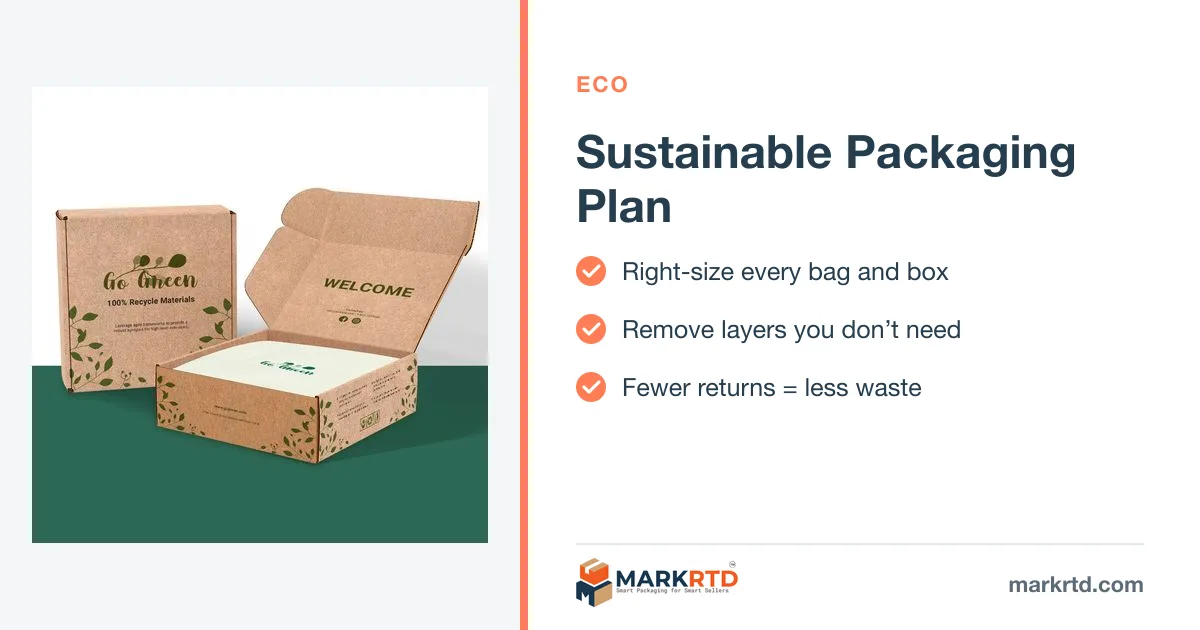
The most sustainable packaging for an online seller is the least packaging that still delivers the product undamaged. Start by right-sizing bags and boxes, cutting extra layers and void fill, switching to single-material recyclable packs, reusing clean inbound cartons for B2B, and reducing damage returns, since every return doubles the packaging and transport. These steps usually save money too.
Sustainable packaging sounds expensive: compostable mailers, custom printed paper, plant-based tape. For a small seller on thin marketplace margins, that's not realistic. The good news is that the steps with the biggest impact are also the cheapest. Most of them save money.
Step 1: Right-size everything
An oversized bag or box wastes material, takes more space in the truck and can cost you a higher shipping slab. Measure your top products packed, and match each SKU to the smallest bag or box that protects it.
- Polybags: product width or length + thickness + 1 inch. Use the polybag size calculator.
- Boxes: about 2 inches of cushioning space on each side, no more. Check with the volumetric weight calculator.
Step 2: Remove layers you don't need
Look at one packed order and ask of each layer: does this protect the product or the customer experience? Common extras:
- A box inside a box for a product that isn't fragile
- Bubble wrap around clothing
- Three rounds of tape where one H pattern is enough
- Printed inserts nobody reads
Step 3: Choose single-material, recyclable packs
Corrugated boxes and unlaminated kraft paper are the most collected packaging in India. Single-material LDPE bags recycle better than mixed bags. Avoid laminated or metallised outer packaging. Details in recyclable ecommerce packaging.
Step 4: Consider kraft paper for clothing
For clothes, books and boxed accessories, kraft paper courier bags are a good switch on dry routes, with the product in a sealed inner bag. They cost more per piece, so try them on your own website orders first, where the customer sees your brand.
Step 5: Reuse what comes in
Your suppliers send you goods in cartons. Clean, strong inbound cartons are fine for B2B shipments, transfers between your warehouses or returns to suppliers. For customer orders, use new packaging; marketplaces like Amazon ask for new packaging, and a reused box with old labels confuses couriers.
Step 6: Reduce returns
A return means the product travels twice and often gets repacked. Cutting damage and wrong-item returns is one of the biggest sustainability wins, and the most profitable. See ecommerce packaging to reduce returns and reduce product damage in shipping.
Step 7: Make honest claims
If you tell customers about your packaging, keep it true and specific: "recyclable corrugated box", "we use the smallest pack that protects your product". Ask for proof before calling anything compostable or biodegradable. Avoid "100% eco-friendly" unless it really is.
What about EPR?
Under India's Plastic Waste Management Rules, producers, importers and brand owners using plastic packaging have extended producer responsibility and register on CPCB's EPR portal. Whether and how it applies to your business depends on its setup, so check with the portal or a compliance adviser. Using less plastic reduces this burden either way.
A 30-day plan
- Week 1: measure your top 10 SKUs packed and set a bag or box size for each.
- Week 2: remove one unnecessary layer from your standard pack.
- Week 3: switch your highest-volume pack to a single-material recyclable option.
- Week 4: compare packaging cost, shipping cost and damage returns with the month before.
Most sellers find the right-sizing alone lowers their monthly packaging and shipping bill.
Shop the packaging in this guide
Free seller tools for this
Frequently asked questions
What is sustainable packaging for online sellers?
Using the least packaging that still delivers the product undamaged, in materials that are easy to recycle, and reducing returns that double packaging and transport.
Is sustainable packaging expensive for small sellers?
Not necessarily. Right-sizing, removing extra layers and cutting damage returns usually save money.
What is the most eco-friendly courier bag?
It depends on the product and route. Unlaminated kraft paper mailers are easiest to recycle in India; single-material LDPE bags are lighter and water-resistant.
Can I reuse boxes for ecommerce orders?
Reuse clean inbound cartons for B2B and internal transfers. For customer orders, use new packaging, as marketplaces like Amazon ask.
Does EPR apply to online sellers?
Producers, importers and brand owners using plastic packaging have EPR duties under India’s Plastic Waste Management Rules. Check how it applies to your business with the CPCB EPR portal or an adviser.
Read next
- Recyclable Ecommerce Packaging in India: What Really Gets RecycledWhich ecommerce packaging really gets recycled in India: boxes, kraft paper, LDPE bags, tape, bubble wrap and labels, plus EPR and honest claims.
- Kraft Paper Courier Bags: When They Beat Plastic PolybagsKraft paper courier bags vs plastic polybags: strength, water, cost, recycling, which products suit them, sizes, GST and Myntra use.
- How to Reduce Product Damage in Shipping: A Seller’s ChecklistHow to reduce product damage in shipping: choosing 3, 5 or 7 ply boxes, bubble wrap, void fill, taping, fragile marking and the drop test.
- Ecommerce Packaging to Reduce Returns: What Actually WorksPackaging fixes that cut damaged, missing and wrong-item returns for Indian online sellers: tamper-evident bags, right boxes, SKU labels and videos.