
Short answer
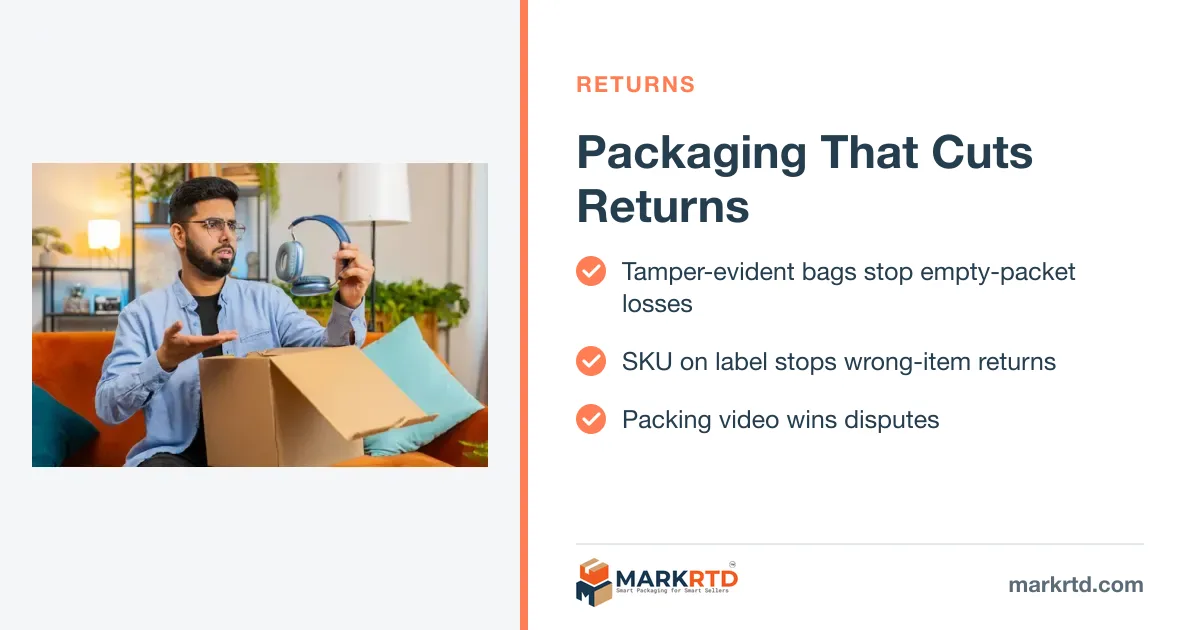
Packaging can’t stop every return, but it can cut the ones that cost sellers most: damaged, missing, empty-packet and wrong-item returns. Use tamper-evident bags or taped boxes, the right size with cushioning for anything breakable, the SKU printed on each label so the right product goes in, and a packing video with the parcel weight as proof. Size charts, good photos and a thank-you card help with the rest.
Every seller on Meesho, Flipkart or Amazon knows the feeling: a return comes back, you open it, and the reason makes no sense. "Product damaged" on a kurti. "Empty packet" on a parcel that weighed 400 grams when it left. "Wrong item" when you're sure you packed the right one.
Some returns you can't control: the customer changed their mind, the size didn't fit, the colour looked different. But a big share of the costly ones start at your packing table. Here's what reduces them.
First, know which returns packaging can fix
| Return reason | Can packaging help? | What helps |
|---|---|---|
| Damaged in transit | Yes, a lot | Right box, cushioning, fragile marking |
| Missing item / empty packet | Yes | Tamper-evident seal, packing video, weight on record |
| Wrong item sent | Yes | SKU on label, picklist, scan before sealing |
| Used or swapped product returned to you | Partly | Seal tags, packet codes, unboxing proof |
| Size or fit | No | Accurate size chart in the listing |
| Not as described | A little | Better photos; neat packaging sets expectations |
1. Use tamper-evident packaging every time
An intact tamper-evident bag is your best evidence when a customer claims the packet was empty. Use bags with a permanent adhesive that tears the film when opened, and seal the full flap. See tamper proof packaging benefits.
2. Match the pack to the product
Soft goods go in polybags. Anything that can break, bend or crush goes in a box. Glass, cosmetics, electronics and shoes in a polybag are returns waiting to happen. Our damage guide covers box ply and cushioning.
3. Right size, no rattling
A product that moves inside the parcel gets damaged. Fill gaps in boxes with bubble wrap or paper, and use the smallest polybag that seals. The polybag size calculator gives you the exact bag size.
4. Put the SKU on the label
Wrong-item returns usually come from look-alike products: same kurti in two colours, same earring in silver and gold. Printing the SKU and quantity on each shipping label lets the packer check the product against the label before sealing. The free label cropper adds SKU and quantity to Meesho, Flipkart and Amazon labels and gives you a picklist.
5. Record a packing video
For claims, proof wins. Record one continuous video per order: the label with the order number, the product, the product going in, the bag being sealed and the parcel on a weighing scale. Keep the videos until the return window closes. Check each marketplace's claim rules in your seller panel for the proof they accept.
6. Weigh every parcel
When a customer says "empty packet", the weight recorded by the courier at pickup is strong evidence. Weigh the packed parcel on a digital scale and make sure the weight you declare is right. It also keeps you from paying weight-discrepancy charges.
7. Use seal tags for high-value or easily swapped items
For branded clothing, footwear and accessories, a numbered seal tag on the product makes it harder for a used or different product to come back as a "return". Note the tag number in your packing video.
8. Make the unboxing feel cared for
A neat parcel and a small thank-you card don't stop a size return, but they reduce "not as expected" returns and help reviews. You can make one free with the thank-you card maker. Don't ask for reviews in exchange for anything, which marketplaces don't allow.
Track it
Every month, sort your returns by reason. If "damaged" goes up, fix boxes and cushioning. If "missing" or "empty" goes up, tighten sealing and video. If "wrong item" goes up, add SKU checks. Change one thing at a time so you know what worked.
Shop the packaging in this guide
Free seller tools for this
Frequently asked questions
How can packaging reduce ecommerce returns?
It reduces damage, missing-item and wrong-item returns: tamper-evident bags, right-size boxes with cushioning, SKU on labels and a packing video as proof.
What is the best packaging to avoid empty packet claims?
A tamper-evident courier bag sealed across the full flap, plus a packing video and a correct parcel weight on record.
Do packing videos help with Meesho or Flipkart claims?
Many sellers use continuous packing videos as proof in claims. Check the current claim rules in your seller panel for what each marketplace accepts.
How do I stop sending the wrong product?
Print the SKU and quantity on each label, pick with a picklist, and check the product against the label before sealing.
Can packaging reduce RTO?
Only a little. Most RTO comes from customers refusing COD orders. Packaging helps by making sure the RTO parcel comes back intact and unswapped.
Read next
- Tamper Proof Packaging Benefits for Online SellersBenefits of tamper proof packaging for online sellers: fewer empty-packet claims, proof in disputes, less pilferage, safer RTOs, more trust.
- How to Reduce Product Damage in Shipping: A Seller’s ChecklistHow to reduce product damage in shipping: choosing 3, 5 or 7 ply boxes, bubble wrap, void fill, taping, fragile marking and the drop test.
- Meesho Packaging Rules for Suppliers: What to Follow in 2026Meesho packaging rules for suppliers: branded packaging, polybag vs box, label placement, weight slabs and packing proof for wrong or missing product claims.
- Tamper Proof Courier Bag Sizes: Pick the Right OneTamper proof courier bag sizes from 6×7 to 20×23 inch, what fits in each, and how to tell a real tamper-evident seal from an ordinary sticky flap.